

Laser hair removal can feel different depending on the body area being treated. Some spots have thinner skin, thicker hair, or more nerve endings. Good laser hair removal education teaches future technicians how these factors affect client comfort.
Which Areas Usually Feel More Sensitive?
There is no single area that hurts the most for every person. Research shows that pain can change based on the treatment area.
One clinical study found that the chest and abdomen had the highest pain scores among the areas studied. Another study reported that the upper lip and underarm areas caused the greatest discomfort.
People who are considering laser training should know that sensitive areas may need extra attention. Students near Corona Dr. & Flynn Pkwy. can use this crossing as a local reference when planning training days.
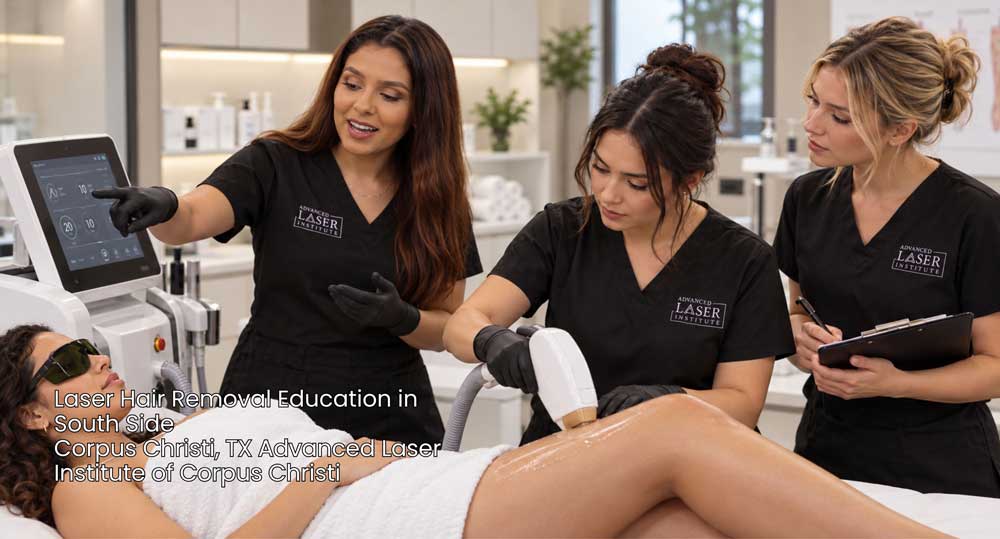
What Research Says About Laser Hair Removal Pain
Pain is an important part of laser training because technicians need to know how clients may react. “Pain can be a limiting factor for patients who are considering laser hair reduction,” clinical director Huma Siwani stated.
Cooling and treatment methods can make a major difference. In one study involving underarm laser treatment, 95% of participants experienced less pain when pneumatic skin flattening was used compared with conventional cooling treatment.
Students interested in laser hair removal education South Side should study both treatment techniques and client comfort.
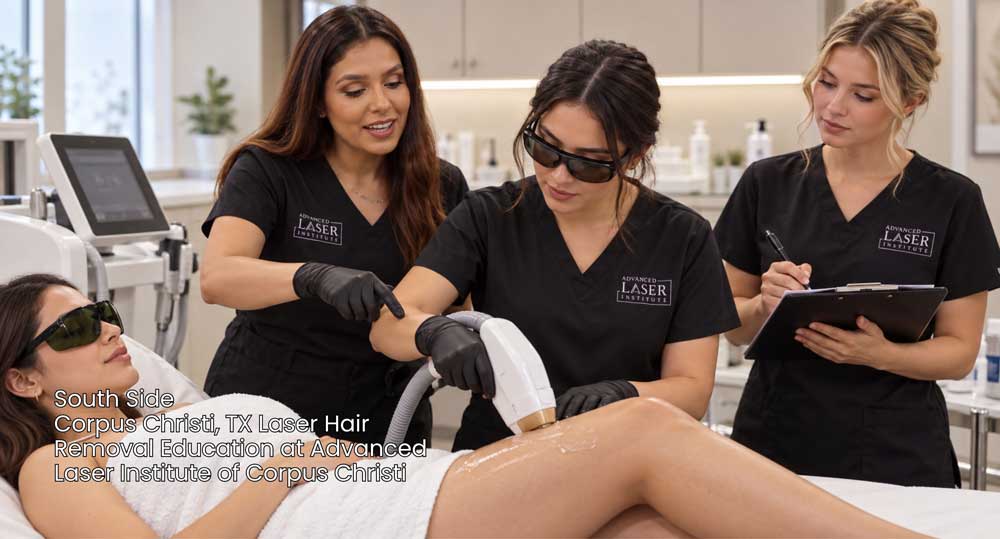
Why Pain Levels Can Change
Pain does not depend only on location. Hair thickness, skin sensitivity, laser settings, and device type can all affect how treatment feels.
A person with thick, dark hair may feel stronger heat because the laser targets pigment in the hair. Treatment settings also need to match the client’s skin and hair type.
Future technicians should pay close attention to client reactions while using equipment correctly. Students near Stonegate Park can use it as a local point when planning travel to training.
Training at Advanced Laser Institute of Corpus Christi
The Advanced Laser Institute of Corpus Christi can help students build practical knowledge of laser hair removal, including treatment areas, safety, client preparation, and comfort.
Interest remains strong. The American Society for Dermatologic Surgery reported that 65% of surveyed consumers considering cosmetic procedures were considering laser hair removal in its 2023 survey of 3,503 people.
Students around the South Side can use this training to prepare for real treatment situations. The coordinates 27.714200089849857, -97.3911628457485 can serve as a useful reference point for students planning travel routes before training.
Driving Directions from South Side to Advanced Laser Institute of Corpus Christi
Prepare for Better Laser Treatment Skills
The most painful area of laser hair removal will differ from customer to customer. Some may find areas such as the upper lip, underarms, chest, abdomen, and bikini area to be particularly sensitive.
Strong training helps future technicians recognize these differences and use proper treatment methods. Advanced Laser Institute of Corpus Christi gives students a strong foundation to build safe, professional laser hair removal skills.
Ready to build your laser hair removal skills? Enroll now and take the next step toward professional training. If you have questions about classes, schedules, or enrollment, call us at (361) 398-7800.
FAQs
1. Which Part Hurts the Most During Laser Hair Removal?
It depends. Research indicates increased discomfort in places like the chest, belly, upper lip, and underarms.
2. Why Are Some Areas More Painful?
The amount of discomfort can depend on skin sensitivity, hair thickness, nerve endings, and laser settings.
3. Does Laser Hair Removal Always Hurt?
No. Pain levels vary greatly from client to client and by treatment area.
4. Does Cooling Assist With Discomfort?
Yes. Some cooling and skin-flattening treatments have been shown in research to reduce pain during therapy.
5. Why Should Laser Students Be Taught Pain Management?
Knowing when a client is uncomfortable, choosing appropriate therapy sites, and providing safer care helps them.


